
This lesson plan is for upper-intermediate to advanced adult students (B2-C2). It can also work with older teenagers. It takes between 1-1.5 hours and focuses on reading comprehension, speaking and vocabulary expansion using authentic material.
Ever since I came across and taught the Collin’s Word of the Year 2023 ESL lesson, I have eagerly awaited the annual ‘Word of the Year’ announcements. Not only are the words and the topics inspired by them always relevant for students, but it introduces them to brand new English words which many native speakers may not know (an opportunity to ‘one up’ them, so to speak). My first experience with this type of lesson was with two C2 students in their late teens. It generated a lot of interesting discussion and we all came away from the lesson having learned a lot (including myself!).
Inspired, I created a 2024 Words of the year lesson plan, which was once again a hit with my students. Last year, I missed the boat and was therefore crestfallen to discover searches for ‘Words of the year ESL lesson plans’ on my website. Clearly, I am not the only ESL teacher who sees the value in this type of lesson. Always eager to be of service to my fellow ESL teachers, I was quick to start planning this lesson when this year’s first ‘Word of the year’ announcement was made.
It is based on the BBC article ‘Maxxing’ selected as Dictionary.com word of the year. It is likely that most English adults will have come across the term in some capacity, whether it’s through their children or their own social media habits. “Maxxing” has made it to the news frequently in 2026 in various forms, from the controversial “looksmaxxing” phenomenon to more wholesome trends, such as “Nonnamaxxing”. In essence, it describes doing something (almost anything qualifies it seems – see the nothing-maxxing trend) to its absolute maximum (which can mean doing absolutely nothing. See again: ‘nothing-maxxing’). Whatever way your students feel about it, it’s bound to create plenty of discussion in the classroom.
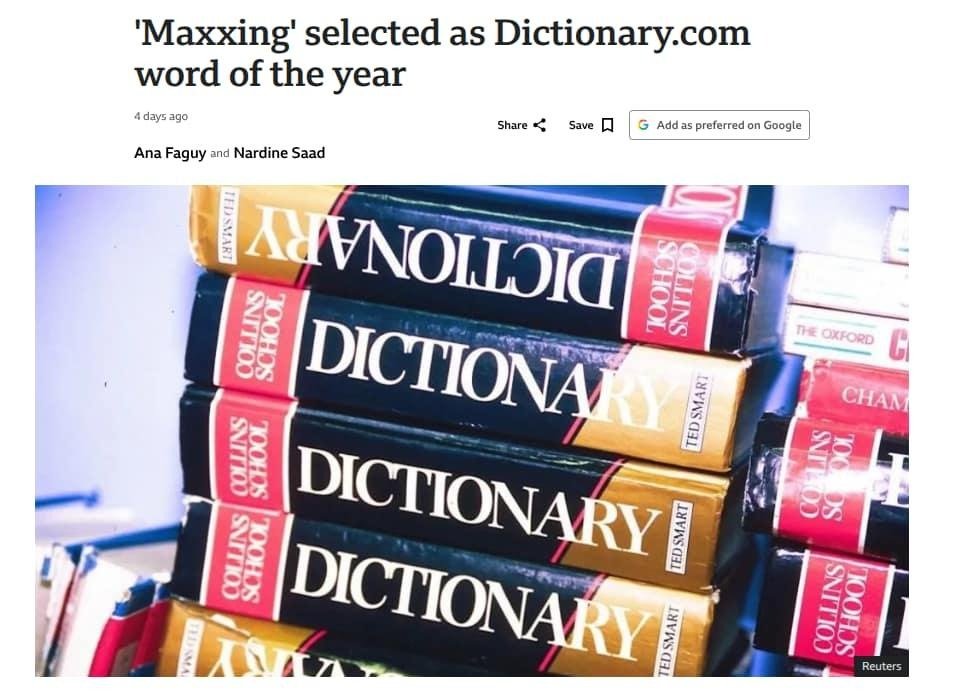
The authentic material this lesson is based on.
An overview of how to run this Word of the Year ESL lesson
The materials included for this lesson (downloadable below) include the article with the focus vocabulary highlighted, twelve discussion questions, one closed practice vocabulary exercise, one production exercise and two extra tasks. Here’s an overview of how to run the lesson, with timings:
- Opening discussion/making predictions: 10 minutes (students try to predict the word based on images)
- Article reading: 10 minutes
- ‘Gist’ discussion question: 3 minutes
- Closed practise matching task (target language from the text to their definitions): 5 minutes
- Discussion – Vocabulary in context: 10 minutes
- Discussion – deep-dive into the text; connecting the text with real-world experiences and the wider socio-economic circumstances of 2026 (5 minutes)
- Production: Englishmaxxing – students create their own ‘maxxing’ terms to share with the class (15 minutes)
- Extra task: Do some research (students search online using the ‘maxxing’ hashtag for a trend they can share with their fellow students – suitable for online classes): 5-10 minutes
- Extra task: Making the most of maxxing, or doing it for laughs? – Advanced students examine critical approaches to this trend and try to replicate it with their own ideas: 15 minutes
Of course, as with all my lessons, these timings are very rough indications. If you find that the deep-dive discussion is engaging the students so effectively that they almost forget you’re there, why not run with it? If it ends up consuming twenty minutes of your class because your students are so thoroughly enjoying it, is that really so bad? Not in my view, anyway.
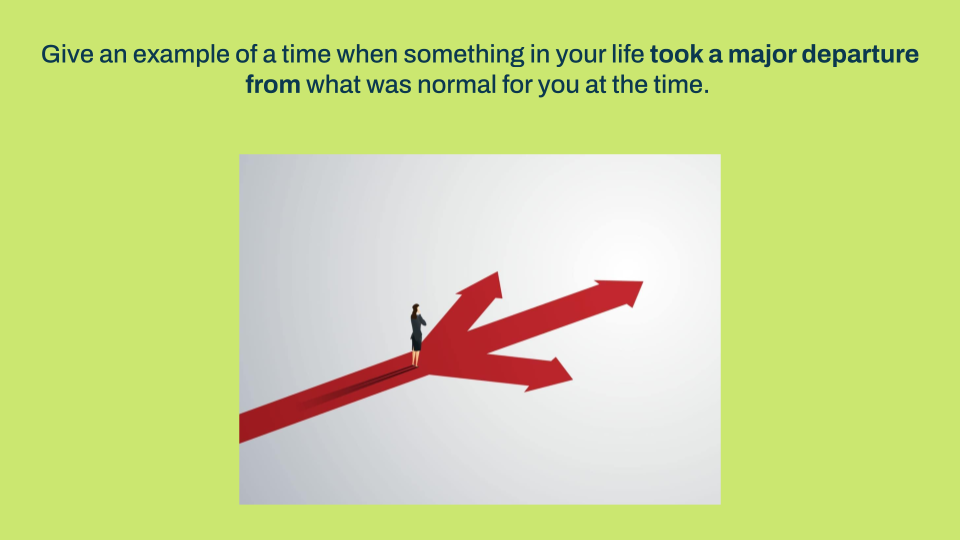
An example of one of the ‘Vocabulary in context’ discussion slides.
The value of using authentic materials
What I love about using authentic materials (particularly news articles) is that they’re relatable, usually quite topical and, of course, authentic. They use words and phrases that native English speakers really use, rather than the unnatural-and-sterilised-sounding phrases from made-for-purpose materials (one of the many things I love about the English language is how you can turn almost anything into an adjective by adding a hyphen; I guess that’s adjective-maxxing?). The focus vocabulary of this lesson (taken directly from the text), for instance, is as follows:
- Go all in
- A major departure from
- Push it further
- For laughs
- Fall out of favour
- Get the most out of something
They are the types of phrases that upper intermediate and advanced students, with their near-perfect understanding of how to employ English grammar, might puzzle over. Consider, for instance, this single paragraph from the article:
“Whatever we’re doing, we want to push it further,” Johnson said. “But its expanding uses also reveal how people are responding to that impulse. Some embrace it. Some exaggerate it for laughs. Others subvert it entirely to describe stepping back from the relentless pursuit of more.”
In three lines, we have two idiomatic phrases and two phrasal verbs, all of which are perfectly suited to convey what the native speaker wants to say. For me personally, authentic materials (again, particularly with news articles) are an invaluable source for ESL teachers. For other article-based lessons for advanced students, see:
- ESL U.S Politics Lesson: Trump’s cryptocurrency
- Fake News: An ESL lesson for advanced students
- 2024 Words of the year: ESL lesson for Advanced students
The one disadvantage of using news articles as authentic materials is, of course, their habit of becoming ‘old news’. Still, ESL teachers with enough imagination and flexibility can use old articles to foster English discussion in their classrooms. The following questions could help:
- Is this article still relevant? Why or why not?
- How has the world changed since this article was published?
- Has this article ‘aged well’? Why or why not?
- Find an article on this topic that was published more recently. What has changed since the previous article was published?
Etc, etc.
Download the 2026 Word of the Year ESL Lesson plan
Loved this lesson? Help keep Emma Teaches English subscription and ad-free by showing your appreciation with a tip! All feedback is welcome in the comments.